For many Americans, Labor Day means a three-day weekend, a backyard cookout, one last trip before summer fades, or the unofficial beginning of fall. But the holiday started with a much more specific purpose: recognizing the people whose work helped build the country.
So why do we celebrate Labor Day? The holiday grew out of the American labor movement of the late nineteenth century, when workers and labor organizations pushed for public recognition of their economic and civic contributions. The first Labor Day celebration took place in New York City on September 5, 1882. Twelve years later, Labor Day became a national legal holiday observed on the first Monday of September. The United States Department of Labor traces the holiday to those early efforts by American workers and labor activists.
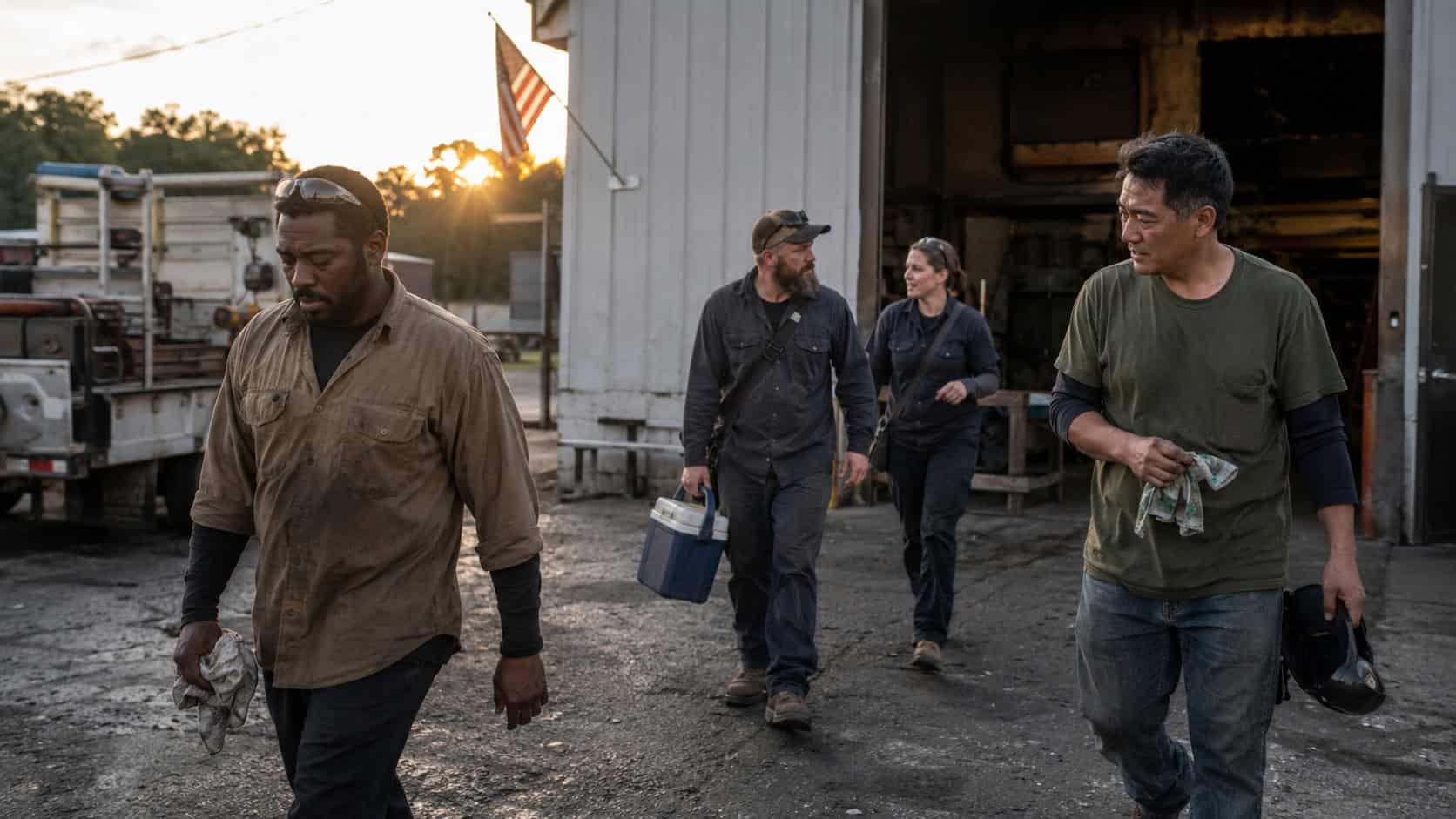
In 2026, Labor Day falls on Monday, September 7. Today the holiday belongs to Americans across occupations and industries, from tradespeople and factory workers to farmers, nurses, drivers, small-business owners, technicians, teachers, first responders, service workers, and countless others whose daily effort keeps communities functioning.
The history is worth remembering because Labor Day is more than a symbolic end to summer. It is an American tradition built around the dignity of useful work and the contribution ordinary people make to the nation.
Quick Answer: Why Do We Celebrate Labor Day?
Labor Day honors the social and economic contributions of American workers. The first Labor Day celebration was held in New York City on September 5, 1882, after labor organizations called for a public holiday recognizing working people.
Congress made the first Monday in September a legal holiday in 1894, and President Grover Cleveland signed the measure on June 28 of that year.
In 2026: Labor Day is Monday, September 7.
Where Did Labor Day Come From?
Labor Day emerged during a period of enormous change in the United States. Industrialization was transforming the economy, cities were expanding, factories and railroads were reshaping how Americans worked, and organized labor was becoming increasingly visible in public life.
Workers and labor organizations argued that the people producing goods, constructing buildings, moving freight, operating machinery, and performing the countless jobs behind American economic growth deserved public recognition.
According to the United States Department of Labor, the first Labor Day holiday was celebrated on Tuesday, September 5, 1882, in New York City according to plans developed by the Central Labor Union. A second celebration followed the next year.
The early model looked surprisingly familiar. Labor Day proposals called for a public parade followed by recreation and festivities for workers and their families. Parades, picnics, gatherings, and later public speeches became part of the tradition.
Who Invented Labor Day?
There is no completely settled answer to that question.
The Department of Labor identifies two men with credible claims: Peter J. McGuire, a carpenter and labor leader, and Matthew Maguire, a machinist who served as secretary of New York’s Central Labor Union. Historical accounts have credited each man with helping originate the idea.
Peter McGuire was long associated with the proposal for a general holiday honoring labor. Later historical research strengthened the case for Matthew Maguire, who may have proposed the holiday while serving with the Central Labor Union in 1882. Both men participated in the first Labor Day parade.
That uncertainty is useful history rather than a problem to hide. Labor Day was not simply the creation of one politician or one proclamation. It developed out of a broader movement among working Americans seeking recognition for the value of labor.
How Labor Day Became a National Holiday
The idea spread beyond New York during the 1880s. Municipal governments began recognizing Labor Day, and states soon followed.
New York introduced early state legislation, but Oregon became the first state to enact a Labor Day law, doing so on February 21, 1887. Colorado, Massachusetts, New Jersey, and New York also adopted Labor Day legislation that year. More states followed.
Federal recognition arrived in 1894. On June 28, 1894, President Grover Cleveland signed legislation making the first Monday in September a legal holiday. The National Archives identifies the measure as Public Law 53-95, “An Act Making Labor Day a Legal Holiday”.
That law established the September observance that Americans still recognize today.
Why Is Labor Day in September?
Labor Day has always been closely associated with September. The first celebration occurred on September 5, 1882, and the federal law later established the holiday on the first Monday of the month.
That timing also gave the American calendar a civic holiday between Independence Day and the major holidays of late fall. Over time, its place near the end of summer helped create many of the traditions now associated with Labor Day weekend.
The legal rule remains simple: Labor Day is observed on the first Monday in September. The Office of Personnel Management includes it among the federal holidays recognized under that schedule. In 2026, the first Monday falls on September 7. OPM publishes the federal holiday calendar.
What Does Labor Day Actually Celebrate?
The holiday is fundamentally about the contribution of workers.
The Department of Labor describes Labor Day as an annual celebration of the social and economic achievements of American workers and connects those contributions to the country’s strength, prosperity, and well-being.
That idea reaches well beyond any single profession. America is built through millions of different forms of work. Someone pours the concrete. Someone repairs the transmission. Someone stocks the grocery store before sunrise. Someone keeps the power running. Someone treats the patient, teaches the student, harvests the crop, drives the truck, writes the software, opens the small business, or keeps a family operation going.
A country is not built only by the names that make history books. It is also built every day by people who show up, learn a trade, solve a problem, serve a customer, raise a family, and take responsibility for the work in front of them.
That is where Labor Day fits naturally into the broader America 2 Wear idea of country over party and respect for everyday Americans. The holiday does not require romanticizing every chapter of industrial history or pretending that debates over labor policy have ever been simple. It asks us to recognize something more basic: work matters, and the people doing it matter.
Labor Day and the Story of American Manufacturing
The connection between Labor Day and American manufacturing is especially direct. Much of the holiday’s early history unfolded during the rapid industrial expansion of the late nineteenth century.
Factories, railroads, mines, workshops, construction crews, ports, farms, and other industries depended on vast numbers of working Americans. That history continues to matter in present-day conversations about domestic production, skilled trades, supply chains, craftsmanship, and where Americans choose to spend their money.
We explored that connection more directly in Made in USA: Why American Manufacturing Still Matters, including why domestic productive capacity and skilled work remain important beyond any single holiday.
For shoppers trying to separate patriotic marketing from actual sourcing questions, our guide to Made in USA patriotic clothing vs. imported apparel also looks at the issue from the buyer’s side.
How Labor Day Became the Unofficial End of Summer
Its historical purpose may center on labor, but generations of Americans have also made Labor Day a social holiday.
The first celebrations already included recreation for workers and their families. Modern cookouts, family gatherings, community events, travel, and outdoor weekends are therefore not entirely disconnected from the holiday’s roots. Recreation was part of the Labor Day idea from early on.
That makes Labor Day one of those distinctly American occasions where history and ordinary life overlap. You can understand what the day commemorates and still enjoy the grill, the lake, the ballgame, the neighborhood gathering, or an afternoon with family.
Patriotism does not have to disappear when Independence Day decorations come down, either. Our guide to patriotic outfit ideas that work year-round looks at ways to carry American style into ordinary weekends and seasons without treating it like a costume reserved for July.
How to Observe Labor Day With Some Perspective
You do not need a ceremony or a history lecture to make Labor Day meaningful. A few simple choices can keep the purpose of the holiday in view.
- Learn the history. Knowing why the holiday exists gives the long weekend more context.
- Recognize the workers around you. Many Americans still work on Labor Day, including people in health care, transportation, hospitality, public safety, retail, utilities, and essential services.
- Support skilled work and craftsmanship. Buy thoughtfully when you can, maintain what you own, and appreciate the knowledge involved in making and repairing useful things.
- Spend time with family or community. Recreation and gatherings have been associated with Labor Day since its earliest celebrations.
- Respect work in all its forms. A functioning country depends on more occupations than most of us notice in any given day.
Labor Day Is About More Than a Day Off
Labor Day has changed with the country. The economy of 2026 looks very different from the industrial America of 1882, but the core question behind the holiday still makes sense: do we recognize the people whose work keeps the nation moving?
The first Labor Day parade was an organized public statement that workers deserved recognition. State after state adopted the idea, and in 1894 it became a national holiday. More than a century later, millions of Americans mostly encounter Labor Day as a welcome Monday away from work.
There is nothing wrong with enjoying that break. Rest, family, recreation, and time away from the job have been part of the holiday tradition from the beginning.
But the history gives the weekend more weight. Labor Day is ultimately a tribute to the Americans who build, make, maintain, teach, transport, repair, serve, invent, grow, protect, and keep going.
Wear the Working-American Spirit
For readers who like carrying that work ethic and American identity into everyday clothing, these three current America 2 Wear pieces have the most natural connection to the Labor Day story, from a work-ethic tee for warm September days to a hoodie as cooler weather approaches.
-

Patriotic Hoodies & Sweatshirts, Blue Collar & American Worker Apparel, Minimalist Patriotic Hoodies
Price range: $49.99 through $56.99Select options This product has multiple variants. The options may be chosen on the product page -
Patriotic T-Shirts, Blue Collar & American Worker Apparel, Minimalist Patriotic Tees
Price range: $29.99 through $33.99Select options This product has multiple variants. The options may be chosen on the product page -
Patriotic T-Shirts, Blue Collar & American Worker Apparel, Full Front Graphic Tees
Price range: $29.99 through $33.99Select options This product has multiple variants. The options may be chosen on the product page


Frequently Asked Questions About Labor Day
Why do we celebrate Labor Day?
Labor Day celebrates the social and economic contributions of American workers. It developed from the labor movement of the late nineteenth century and became a national legal holiday in 1894.
When was the first Labor Day celebrated?
The first Labor Day celebration took place in New York City on September 5, 1882. It was organized according to plans developed by the Central Labor Union and included a workers’ parade and recreation afterward.
Who started Labor Day?
The exact founder is disputed. Peter J. McGuire, a carpenter and labor leader, and Matthew Maguire, a machinist and Central Labor Union secretary, both have historical claims to originating the Labor Day idea. The United States Department of Labor recognizes the uncertainty surrounding who deserves sole credit.
When did Labor Day become a national holiday?
Labor Day became a national legal holiday in 1894. President Grover Cleveland signed the legislation on June 28, 1894, establishing the first Monday in September as Labor Day.
Why is Labor Day always on a Monday?
The 1894 federal law established Labor Day on the first Monday in September. That rule continues today, which means the calendar date changes from year to year while the holiday always creates a Monday observance.
When is Labor Day in 2026?
Labor Day falls on Monday, September 7, 2026. Federal holiday schedules list Labor Day on the first Monday of September.
Is Labor Day only about unions?
No. Organized labor played a central role in creating the holiday, but Labor Day is nationally observed as a tribute to the contributions of American workers broadly. Its modern meaning extends across occupations, industries, union and nonunion workplaces, trades, professions, small businesses, and other forms of work.