Patriotic hoodies make the most sense when they do more than carry a flag, eagle, founding-era symbol, or freedom-minded message. A good fall hoodie also has to work as clothing: comfortable enough for long wear, substantial enough for cooler mornings, easy to layer, and built in a style you will still want to reach for after the first cold front passes.
That matters because fall is not one temperature. September may still feel like T-shirt weather in parts of the country, while October and November can bring genuinely cold mornings somewhere else. The most useful patriotic hoodies are therefore not necessarily the thickest ones. They are the ones that fit your climate, your routine, and the layers you already wear.
Fabric content, fleece construction, fit, care requirements, graphic style, and intended use all deserve attention before you buy. A hoodie for outdoor weekends does not have to make the same tradeoffs as one intended for everyday errands, game days, travel, or wearing under a jacket.
Patriotic clothing has also moved well beyond holiday-only wear. As we have discussed in How Patriotic Apparel Became Everyday Fashion, American-themed apparel increasingly works as ordinary casual clothing when the design and the rest of the outfit are handled with some restraint.
Patriotic Hoodies for Fall: Quick Buying Guide
Best all-around choice: Look for a comfortable fleece or sweatshirt-weight layer with enough room for a T-shirt or light base layer underneath.
Check before buying: Fiber content, care instructions, sizing, cuff and hem construction, hood and pocket design, and whether the graphic style fits how often you plan to wear it.
The goal: Buy for your real fall routine first and the artwork second. A hoodie you can actually layer and wear regularly is a better value than one chosen only because the graphic looked good on a product page.
What Makes a Good Fall Hoodie?
A useful fall hoodie sits somewhere between a lightweight shirt and true cold-weather outerwear. It should add warmth and comfort without becoming so bulky that you cannot move, drive, work, or layer a jacket over it when the weather gets worse.
Start With the Fleece and Fabric Construction
One common mistake is treating the word fleece as though it tells you exactly what a garment is made from. It does not. Fleece fabrics can be made from cotton, cotton-polyester blends, or synthetic fibers. The fabric construction, yarns, weight, and finishing all influence how the finished sweatshirt feels and performs.
CottonWorks, an apparel and textile technical resource operated by Cotton Incorporated, notes that fleece can be produced from all-cotton, cotton-polyester blends, or all-synthetic fibers. It also distinguishes between different fleece constructions, including fuller three-end fleece used for cold-weather garments. See the CottonWorks guide to single and double knits.
For a buyer, the practical lesson is simple: do not shop by the word “fleece” alone. Look at the actual garment specifications. A soft lightweight fleece may be excellent for early fall. A fuller sweatshirt may make more sense for colder evenings or outdoor use.
Read the Fiber Label Instead of Guessing
Fiber percentages give you useful information that marketing phrases cannot. Federal textile-labeling rules generally require covered textile apparel to disclose its constituent fibers, along with country-of-origin and manufacturer or marketer identification. Care instructions are also required for covered garments under the Federal Trade Commission’s Care Labeling Rule. The Federal Trade Commission’s apparel and labeling guidance explains these requirements.
That makes the label one of the best places to start when comparing two sweatshirts. Instead of assuming that “premium,” “heavy,” or “performance” automatically means one thing, check what the garment is actually made from and how the manufacturer tells you to care for it.
Cotton-rich and blended fleece can both make good everyday hoodies. The better choice depends on the garment as a whole. Fiber content alone does not tell you everything about softness, warmth, shrinkage, pilling, or longevity because construction, finishing, laundering, and overall quality matter too.
Think About Fit as Part of the Layering System
A fall hoodie generally benefits from a little breathing room. If the sweatshirt fits tightly over a T-shirt in the fitting room, it may feel restrictive once you add a long-sleeve shirt underneath. On the other hand, going excessively oversized can make it awkward to wear under a coat.
Before ordering, compare the garment’s size information with a sweatshirt you already own and like. Pay attention to chest room, body length, sleeve length, and how the hem sits. If you know you will layer underneath, account for that before choosing a size.
Choose a Patriotic Style You Will Actually Wear
The best patriotic hoodie is not always the loudest one. Different designs serve different wardrobes, and choosing the right visual level can matter just as much as choosing the right fleece.
Minimalist Patriotic Hoodies
Small chest graphics, understated eagle designs, restrained flag details, and founding-era symbols work well for people who want the message to be visible without making the entire outfit revolve around it.
This approach also makes a hoodie easier to combine with denim, work pants, boots, neutral jackets, and everyday caps. It follows the same principle behind many of our patriotic outfit ideas that work year-round: let one item carry the main visual message instead of making every piece compete for attention.
Full-Front and Back-Graphic Hoodies
A larger graphic makes more sense when you intentionally want the sweatshirt to be the focal point. Flags, eagles, bison, constitutional themes, American-worker designs, and other bold artwork can all work well, particularly when the rest of the outfit stays simple.
For a full-front graphic, consider whether the artwork still looks balanced when the hoodie naturally folds while sitting or moving. For back prints, think about whether you usually wear the hoodie uncovered or beneath another layer that will hide most of the design.
Heritage and Founding-Era Designs
1776, constitutional language, historic flags, the Liberty Bell, and other heritage themes offer a different kind of patriotic style. They work especially well when the wearer has an actual connection to the meaning rather than treating the imagery as decoration alone.
That distinction is part of what we mean when discussing what makes a patriotic clothing brand authentic. Strong patriotic apparel should have a point of view, but it should also respect the history and values behind the imagery it uses.
How to Compare Hoodie Quality Before You Buy
You cannot fully judge a sweatshirt from a front-view product image. A better evaluation looks at the entire garment.
Check the Cuffs, Hem, Seams, Hood, and Pocket
Ribbed cuffs and hems should recover comfortably rather than feeling loose from the start. Look at how the seams are finished and whether the hood appears proportionate to the body. On a pullover, consider whether the kangaroo pocket is large enough to be useful without dominating the front of the garment.
None of these details has to be elaborate. The goal is simply to notice whether the sweatshirt appears designed as a complete piece of clothing rather than as a blank surface for a graphic.
Do Not Assume Print or Embroidery Is Automatically Better
Embroidery creates texture and a dimensional appearance, which works especially well for smaller logos, chest emblems, and some flag designs. Printing allows larger artwork, distressed graphics, detailed illustrations, and full-front or back compositions that would be impractical to reproduce as dense embroidery.
Neither method automatically guarantees a better hoodie. Execution matters. Judge the decoration based on the design, placement, garment construction, and intended use rather than assuming one technique is universally superior.
Check Care Instructions Before the First Wash
If you want a hoodie to remain part of your regular fall rotation, laundering matters. Follow the garment’s own care label rather than relying on a universal rule copied from another sweatshirt. The Federal Trade Commission requires manufacturers and importers of covered garments to provide regular-care instructions so consumers know how to clean the products they buy.
This is particularly important for decorated garments because the fabric, graphic, thread, trim, and other components all have to live through the same wash cycle. If the manufacturer specifies a particular temperature, drying method, or warning, follow it.
How to Layer Patriotic Hoodies in Fall
A hoodie is useful precisely because it can move between roles as temperatures change. Early in the season, it may be the outer layer over a T-shirt. Later, the same sweatshirt can become a middle layer beneath a jacket.
The National Weather Service recommends dressing in layers for cold conditions and emphasizes appropriate outer protection when weather includes wind or precipitation. A casual hoodie can be part of that system, but it should not be confused with dedicated weatherproof outerwear. See the National Weather Service cold-weather guidance.
For Mild Fall Days
Wear the hoodie over a plain T-shirt with jeans, canvas pants, or casual workwear. Navy, charcoal, military green, sand, black, and heathered neutrals are especially easy to combine with patriotic artwork because they let red, white, blue, or heritage graphics stand on their own.
For Cooler Mornings and Evenings
Add a long-sleeve base layer underneath. The important thing is preserving enough room through the shoulders and chest that the sweatshirt does not bind.
For Colder or Windier Conditions
Move the hoodie into the middle of the system and put an appropriate jacket over it. If wind, rain, snow, or genuinely cold temperatures are expected, the outer layer matters more than trying to solve everything by buying an excessively bulky sweatshirt.
That versatility is one reason patriotic apparel has become more practical as everyday clothing. Our guide to the best patriotic clothing brands looks at the broader question of which companies build American-themed apparel around real everyday use rather than only holiday graphics.
Hoodie vs. Crewneck Sweatshirt vs. Jacket
A hoodie is usually the most versatile casual option when you want a built-in hood and a relaxed layering piece. A crewneck sweatshirt gives you similar torso coverage without hood bulk around the neck, which some people prefer beneath a jacket. A jacket becomes the better tool when wind or precipitation protection is the priority.
There is no reason one garment has to do all three jobs. For most fall wardrobes, the smartest purchase is the piece that fills the gap you actually have.
- Choose a hoodie for casual layering, outdoor weekends, travel, errands, sporting events, and everyday wear.
- Choose a crewneck sweatshirt if you want less bulk around the neckline or regularly wear another jacket on top.
- Choose a proper outer layer when wind resistance, rain protection, or colder-weather protection is the main concern.
Buy for Your Routine, Not Just the Product Photo
The easiest way to make a poor clothing purchase is to begin and end with the design. A strong eagle graphic or American flag may get your attention, but the sweatshirt still has to fit your actual life.
Ask where you expect to wear it. Early-morning work? Weekend travel? Football games? Around a firepit? Under a coat? As an everyday sweatshirt with jeans? The answer should influence the weight, fit, color, and graphic scale you choose.
The best fall hoodie is not the one that looks warmest on a product page. It is the one that fits your climate, your layers, and the way you actually live.
Patriotic style is at its strongest when it feels natural rather than costume-like. Buy something that represents what matters to you, but make sure it earns a place in the rotation as a useful garment too. That balance between meaning and everyday wear is what separates a lasting piece of patriotic apparel from something that only comes out once a year.
Three Fall-Ready America 2 Wear Hoodie Picks
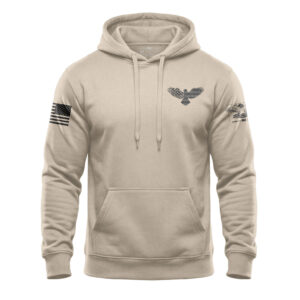
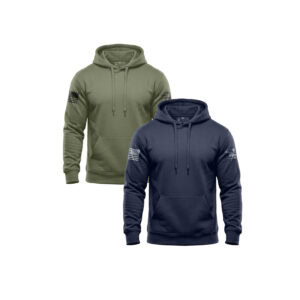
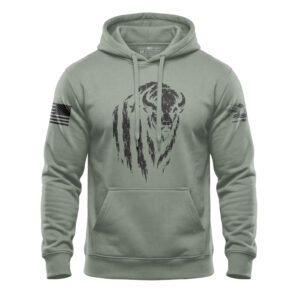
For the current fall season, these three in-stock options cover different needs: a dark two-hoodie rotation, a more understated eagle design, and a rugged full-front American bison graphic. The mix gives readers a practical range rather than three versions of the same look.
-

Patriotic Hoodies & Sweatshirts, American Eagle & Flag Apparel, Minimalist Patriotic Hoodies
Price range: $49.99 through $56.99Select options This product has multiple variants. The options may be chosen on the product page -
Patriotic Hoodies & Sweatshirts, American Eagle & Flag Apparel, Patriotic Hoodie Packs
Price range: $79.99 through $99.99Select options This product has multiple variants. The options may be chosen on the product page -
Patriotic Hoodies & Sweatshirts, American Eagle & Flag Apparel, Full Front Graphic Hoodies, Patriotic Outdoor Apparel
Price range: $49.99 through $56.99Select options This product has multiple variants. The options may be chosen on the product page
Frequently Asked Questions About Patriotic Hoodies
What fabric is best for a fall hoodie?
There is no single best fabric for every fall hoodie. Fleece may be made from cotton, cotton-polyester blends, or synthetic fibers, and the finished feel depends on construction as well as fiber content. For fall, look for a sweatshirt that provides the amount of warmth you need while still leaving enough room to layer. Check the actual fiber label, garment specifications, and care instructions instead of relying only on terms such as “premium” or “heavyweight.”
Are cotton or polyester hoodies better?
Neither fiber is automatically better in every hoodie. Cotton, polyester, and blended fabrics can all be used successfully depending on the garment construction and intended use. Compare the actual fiber percentages, fit, fleece weight, feel, care requirements, and overall construction. A well-made blend may suit an everyday fall layer better than choosing solely on the basis of one fiber name.
How should a patriotic hoodie fit for layering?
A fall hoodie should generally have enough room for a T-shirt or light long-sleeve layer underneath without pulling across the chest, shoulders, or arms. It should not be so oversized that it becomes difficult to wear beneath a jacket. Compare the garment measurements with a sweatshirt you already own and consider what you normally plan to wear underneath it.
Are embroidered patriotic hoodies better than printed hoodies?
Not automatically. Embroidery works especially well for compact logos, emblems, and smaller flag details because it creates texture and dimension. Printing is better suited to many large, distressed, detailed, full-front, or back graphics. Quality depends on the execution, garment, artwork, and intended use rather than the decoration method alone.
How do I keep a patriotic hoodie looking good?
Follow the care instructions supplied with the specific garment. Fabric blends, printing, embroidery, trim, and garment construction can require different care. Check the label for washing temperature, drying instructions, and any warnings rather than assuming every sweatshirt should be laundered the same way.
Can patriotic hoodies be worn year-round?
Yes, depending on your climate and the weight of the sweatshirt. A lighter hoodie can work on cool summer evenings or during travel, while fuller fleece becomes more useful in fall and winter. Keeping the rest of the outfit simple also helps patriotic designs work as everyday clothing rather than making them feel limited to Independence Day or other patriotic holidays.