
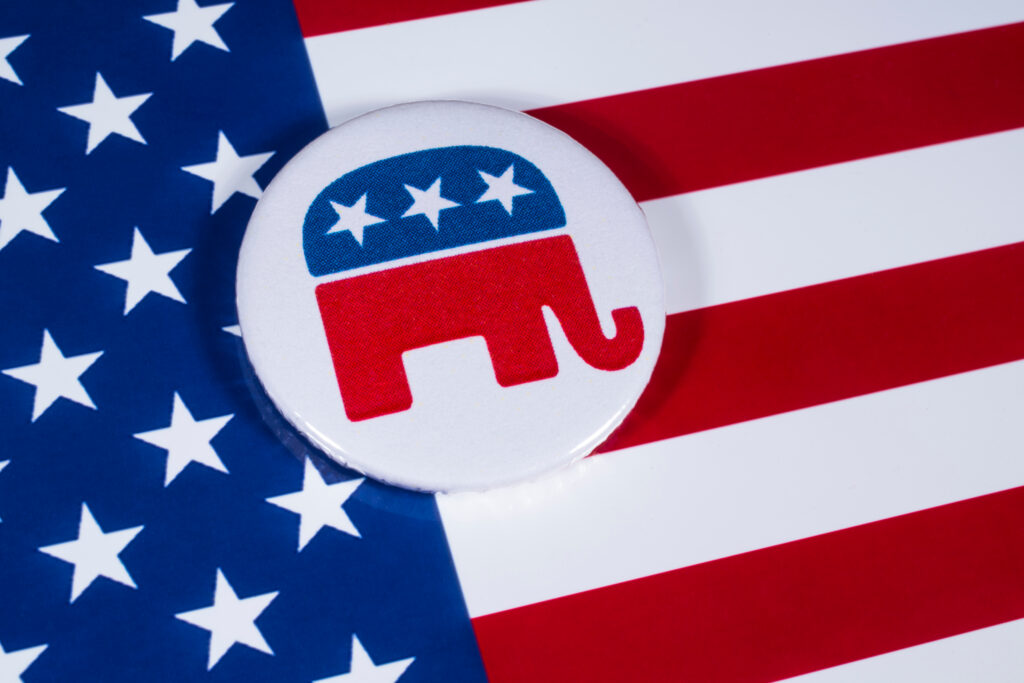
Symbols have long played a vital role in American politics. They capture complex ideas, represent values, and help citizens instantly identify with a movement or cause. For the Republican Party, that symbol is the elephant — strong, steady, and unmistakable.
But where did this image come from? And why an elephant, of all creatures? The story of the Republican elephant is one of art, satire, and symbolism that has endured for more than 150 years. It’s a story rooted in American political evolution and one that continues to define how the Republican Party sees itself — and how others see it — today.
Origins of the Republican Elephant in the 19th Century
The Republican Party was founded in the 1850s, amid intense national division over the issue of slavery. It rose to prominence with Abraham Lincoln’s election in 1860 and soon became the party associated with union, liberty, and the abolition of slavery. The elephant symbol, however, would not appear as a political mascot for another 14 years.
The elephant didn’t appear until later. The man responsible for bringing it to life was Thomas Nast, a German-born political cartoonist often called the “Father of the American Cartoon.” Nast worked for Harper’s Weekly, where his art captured the political mood of the era with sharp wit and memorable imagery.
In 1874, Nast drew a cartoon titled “The Third-Term Panic.” It depicted a donkey (representing the Democratic Party) dressed in a lion’s skin, scaring away animals in a zoo — one of which was labeled “The Republican Elephant.” The elephant was shown running in fear, symbolizing how rumors of President Ulysses S. Grant seeking a third term were causing panic within the Republican Party.
While Nast had used animals before to represent political groups, this was the first time the elephant appeared as a clear representation of the GOP. The image struck a chord with readers, and soon, the elephant became synonymous with the party — just as the donkey had already come to represent the Democrats.
Why Did Thomas Nast Choose the Republican Elephant?
At first glance, the elephant may seem like an odd choice for a political symbol. Yet, the more one looks at its characteristics, the more fitting it becomes for representing conservative political ideals.
The elephant is strong, intelligent, loyal, and steady — traits that many Republicans have long associated with their ideals and approach to governance. The elephant moves carefully and deliberately, symbolizing caution and stability, yet when provoked, it can be powerful and unstoppable — qualities that resonated with the Republican Party’s self-image.
According to historians at the National Archives, political cartoons of the era frequently used animals as symbols because they could convey complex political messages through simple, memorable images. Thomas Nast’s depiction may have started as satire, but the Republican Party quickly embraced the elephant for what it represented: dignity, strength, and wisdom. Over time, it became a proud emblem rather than a political punchline.
The Donkey and the Republican Elephant: America’s Political Duo
The pairing of the elephant and the Democratic donkey is one of the most enduring images in American politics. Both were solidified in the public imagination thanks to Nast’s cartoons, creating a visual language that has defined American political discourse for over a century.
The donkey, first associated with the Democratic Party during Andrew Jackson’s presidential campaign in the 1820s, symbolized persistence and the voice of the common man. Jackson’s opponents mocked him as a “jackass,” but he turned the insult around, using the symbol as a mark of determination and strength.
The elephant, introduced later, became a natural counterbalance. While the donkey represented populism and energy, the GOP mascot came to embody order, respect for tradition, and institutional strength. Together, they provided a visual shorthand for America’s two major political parties — symbols that transcended words and resonated with voters across generations.
This animal symbolism reflects American political traditions that use imagery to communicate complex ideological differences in accessible ways.
The Evolution of the Republican Elephant Symbol
Over the decades, the image of the elephant has evolved alongside the party itself. Early depictions in political cartoons emphasized its size and power, often to suggest that the GOP was the dominant force in American politics during the post-Civil War Reconstruction era.
By the early 20th century, as the party shifted through various ideological phases — from Theodore Roosevelt’s progressivism to the conservatism of Calvin Coolidge — the elephant began appearing as more dignified, measured, and protective in political imagery.
During the mid-20th century, the image was refined again, appearing on campaign posters, lapel pins, and political merchandise. The colors red, white, and blue became standard, with stars placed along the elephant’s back to represent the states of the Union. The design most recognized today features three white stars and a red lower half, often symbolizing patriotism and unity under the Republican banner.
Key periods in GOP elephant symbolism evolution:
- 1874-1900: Original satirical cartoons establish the symbol
- 1900-1950: Formalization as official party imagery
- 1950-1980: Addition of patriotic colors and stars
- 1980-Present: Modern logo standardization and digital adaptation
Each generation has reinterpreted the mascot slightly, but the core message has remained the same: strength, perseverance, and a commitment to foundational American principles.
What the Republican Elephant Stands For Today
In modern times, the elephant represents a set of values that many supporters associate with the party’s ideals — freedom, responsibility, tradition, and strong leadership. Understanding what this symbol represents helps explain its enduring appeal in American political culture.
To many, the elephant stands for the belief in limited government that empowers individuals to succeed through hard work and self-reliance. It symbolizes fiscal conservatism, national defense, and respect for the Constitution.
Core values represented by the GOP mascot:
- Strength and Stability: Like the elephant, the party values steady, deliberate governance
- Traditional Values: Respect for American heritage and founding principles
- Resilience: Ability to endure challenges while maintaining core beliefs
- Wisdom: Thoughtful decision-making based on experience and proven principles
- Loyalty: Commitment to constitutional governance and American ideals
But beyond policy, the symbol also represents an attitude — one of resilience. It embodies the idea that even in turbulent times, America’s strength lies in its stability and enduring values. The elephant doesn’t rush blindly forward; it moves with purpose, guided by experience and a sense of duty to the nation’s founding principles.
This symbolism resonates deeply during elections, patriotic events, and moments of national reflection. The GOP mascot remains a visual reminder of the party’s history and its role in shaping American life.
The Republican Elephant in American Culture
The elephant has become one of the most recognizable symbols in U.S. politics, appearing on everything from bumper stickers and campaign buttons to children’s books and cartoons. It transcends politics in many ways — serving as a cultural shorthand for conservatism, tradition, and national pride.
During presidential elections, the GOP mascot is featured prominently in conventions, campaign signs, and media coverage. Its presence signifies not just a party, but a perspective — one that values order, patriotism, and continuity amid change.
Modern expressions of this political symbolism include:
- Patriotic t-shirts featuring the GOP elephant
- Hats and caps with Republican elephant designs
- Campaign merchandise and political accessories
- Home décor celebrating conservative values
- Lapel pins and jewelry featuring the elephant symbol
Interestingly, the symbol’s meaning has also found a place outside the political arena. It has come to represent broader American themes: steadfastness, respect for heritage, and the ability to adapt without losing identity. In that sense, the GOP mascot has grown beyond politics into a piece of national iconography, much like 1776 symbolism or other patriotic imagery.
Enduring Strength Through Changing Times
Throughout history, the Republican Party has experienced shifts in ideology, leadership, and demographics. Yet the elephant has remained a constant. Its longevity as a symbol speaks to its power and adaptability in representing conservative American values.
Even when the party faces internal debates or external criticism, this enduring mascot remains a reminder of its deep roots — tracing back to Lincoln’s leadership, Reconstruction, and the post-Civil War era. It represents continuity through change, an image of a party that has weathered triumphs and trials but continues to stand tall.
Major historical moments featuring the Republican elephant:
- 1860s-1870s: Lincoln’s presidency and Reconstruction
- 1900s-1920s: Progressive Era and economic expansion
- 1950s-1960s: Post-war conservatism and Cold War leadership
- 1980s: Reagan Revolution and modern conservative movement
- 2000s-Present: Digital age adaptation and contemporary politics
In many ways, the mascot has outgrown its original cartoon origins to become a lasting emblem of resilience — an animal that, despite obstacles, moves forward with deliberate strength. This mirrors how Americans often express their political identity through fashion and symbols.
Comparing the Republican Elephant to Other Political Symbols
While the GOP elephant is uniquely American, political animal symbolism exists worldwide. Understanding how this mascot compares to other symbols provides context for its significance:
- Democratic Donkey (USA): Represents determination and the common person
- British Lion (UK Conservative Party): Symbolizes strength and tradition
- French Rooster (France): Represents vigilance and national pride
- Bear (Russia United Russia Party): Connotes power and territorial strength
The elephant stands out for its specific American context, linking directly to the nation’s two-party system and the visual language Thomas Nast created for understanding political differences.
Frequently Asked Questions About the Republican Elephant
Who created the Republican elephant symbol?
The Republican elephant was created by Thomas Nast, a political cartoonist for Harper’s Weekly. He first depicted the elephant as a symbol of the Republican Party in his 1874 cartoon “The Third-Term Panic.” Nast is also credited with creating the modern image of Santa Claus and popularizing the Democratic donkey symbol.
What does the Republican elephant represent?
The elephant represents strength, dignity, intelligence, and stability. It symbolizes core conservative values including limited government, fiscal responsibility, traditional American values, national defense, and respect for the Constitution. The elephant’s characteristics of being strong yet measured align with the Republican Party’s self-image as a party of careful, principled governance.
When did the Republican elephant become the official GOP symbol?
While Thomas Nast introduced the Republican elephant in 1874, it wasn’t immediately adopted as the official party symbol. The elephant gained popularity throughout the late 1800s and became widely recognized by the early 1900s. It was formalized as the party’s official symbol during the 20th century, with the modern red, white, and blue design becoming standard by the 1950s-1960s.
Why is the Republican Party called the GOP?
GOP stands for “Grand Old Party,” a nickname for the Republican Party that dates back to the 1870s-1880s. The term emphasized the party’s role in preserving the Union during the Civil War and its status as a major political institution. Despite being the younger of America’s two major parties (founded in 1854 compared to the Democrats’ 1828 founding), the “Grand Old Party” name stuck and remains in use today.
What do the stars on the Republican elephant mean?
The stars on the GOP mascot typically represent the states of the United States, similar to how stars appear on the American flag. The modern logo usually features three white stars arranged on the elephant’s back, though the specific number and arrangement have varied over time. The stars reinforce the patriotic symbolism and its connection to American unity.
How has the Republican elephant symbol changed over time?
The Republican elephant has evolved from simple black-and-white cartoon drawings in the 1870s to the colorful, patriotic imagery used today. Early depictions showed a realistic elephant, while modern versions are more stylized. The addition of red, white, and blue colors came in the 20th century, and stars were added to emphasize patriotic themes. Digital media has led to further simplification and adaptation of the symbol for various platforms and uses.
Can I wear Republican elephant clothing and accessories?
Yes, wearing clothing and accessories featuring the GOP elephant is a common way to express political affiliation and conservative values. Many Americans wear patriotic apparel featuring this symbol on t-shirts, hats, pins, and other items, especially during election seasons and political events. It’s a form of political expression protected by the First Amendment.
Conclusion
The Republican elephant has evolved from a 19th-century political cartoon to a 21st-century symbol of American conservatism. What began as satire became a source of pride, representing strength, wisdom, loyalty, and courage. The GOP mascot embodies enduring values like unity, determination, and faith in freedom, standing as a steadfast, adaptable figure throughout American history.
More than a logo, this symbol reflects the party’s history, ideals, and vision for America’s future. From Thomas Nast’s original 1874 cartoon to modern campaign merchandise, this powerful mascot has remained central to how millions of Americans understand and express their political identity. Whether displayed on campaign buttons, patriotic hats, or as part of national political discourse, the elephant continues to represent the values of strength, tradition, and American conservatism.
The story of this enduring symbol reminds us that political imagery has power — it can unite movements, communicate complex ideas simply, and endure across generations. As American politics continues to evolve, the elephant remains a constant, connecting past principles with present purpose and future aspirations.