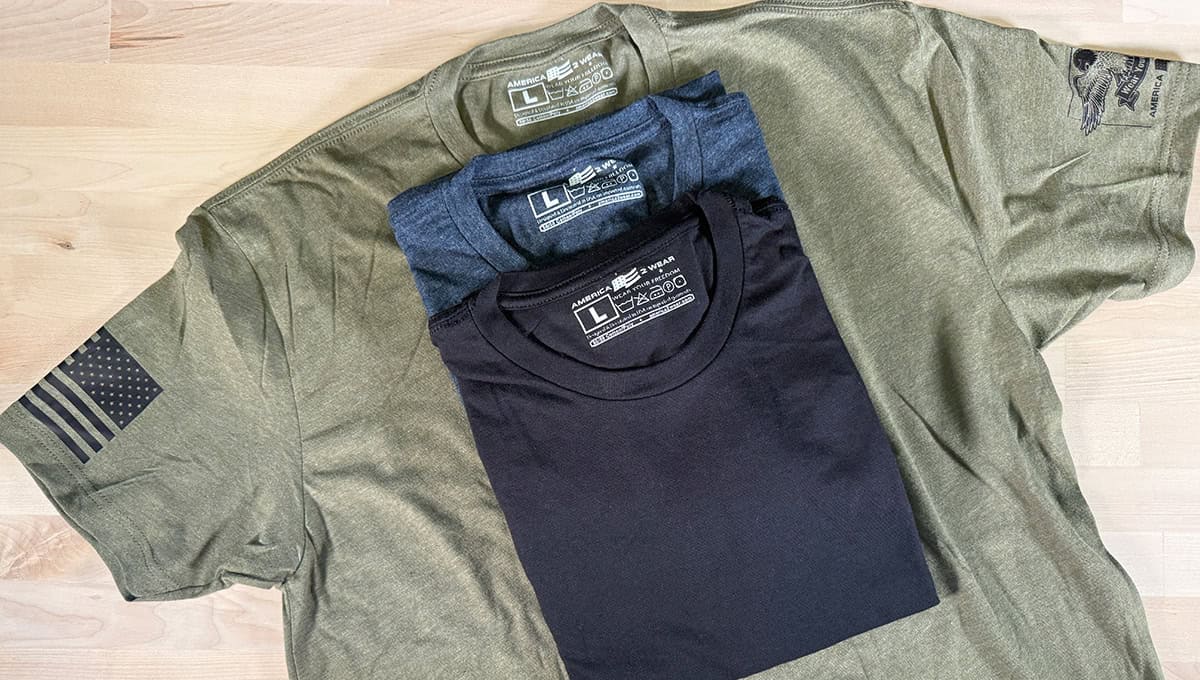
A clothing label can tell you where a garment was made. It can also tell you where it was designed, assembled, printed, embroidered, or shipped. Those details may sound similar, but they do not all mean the same thing.
For Americans who care about domestic manufacturing, understanding Made in USA clothing labels is an important part of making informed buying decisions. The difference between “Made in USA,” “Designed in USA,” and “Assembled in USA” can reveal how much of a garment’s production actually happened in the United States.
This matters especially when shopping for patriotic clothing. An American flag design, an American-owned business, and an American-made garment are three different things. All can have value, but none should automatically be mistaken for another.
The Federal Trade Commission (FTC) has rules and guidance governing claims about American manufacturing. Clothing also falls under specific textile-labeling requirements that help consumers understand where garments and their materials originate.
Here is what the most common labels mean, what they do not guarantee, and how to evaluate clothing claims before spending your money.
Quick Comparison: Made in USA vs. Designed in USA vs. Assembled in USA
Made in USA: An unqualified claim generally means the product is all or virtually all made in the United States, with significant manufacturing and components of domestic origin. Clothing also has specific textile-origin requirements.
Designed in USA: Identifies where the design work was performed. It does not establish where the garment or fabric was manufactured.
Assembled in USA: Identifies substantial domestic assembly. Significant materials or components may come from other countries.
The key takeaway: Look for specific, supported statements about fabric, cutting, sewing, decoration, and final assembly. A patriotic design or American business address is not a substitute for origin information.
What Does “Made in USA” Actually Mean?
Under the FTC’s general standard, an unqualified “Made in USA” claim means a product must be all or virtually all made in the United States.
That includes more than simply completing the final step of production on American soil. The FTC considers where the product was finally assembled or processed, the origins of its significant components, and the extent of any foreign content.
The standard does not establish one simple percentage of American content that automatically qualifies every product. Instead, the FTC evaluates the manufacturing circumstances and whether an ordinary consumer would be misled.
For clothing, there is an additional consideration: products covered by the Textile and Wool Acts have specific labeling requirements. The FTC’s textile guidance states that an unqualified “Made in USA” garment label requires domestic manufacturing using domestic materials, subject to the applicable rules and exemptions.
That distinction matters because fabric, yarn, cutting, sewing, and finishing may occur in different countries.
A shirt sewn in an American facility from imported fabric may involve genuine domestic manufacturing, but an unqualified “Made in USA” statement would not ordinarily describe its full origin accurately. More specific wording is needed.
For a detailed explanation of the governing standards, see the FTC’s Made in USA compliance guidance.
What Does “Designed in USA” Mean on Clothing?
“Designed in USA” generally communicates that a product’s design work took place in the United States. It does not establish the country where its fabric was produced, where the garment was cut and sewn, or where final assembly occurred.
Consider a patriotic T-shirt developed by an American designer. The artwork might be created in the United States while the blank shirt is manufactured overseas.
Both facts can be true at the same time.
Domestic design work can support American creative professionals and businesses. It may also be an important part of a clothing company’s identity.
However, design activity alone does not make an imported garment American-made.
The FTC requires claims about specific American processes to be truthful, substantiated, and not misleading about the product’s overall origin.
When a company advertises American design, shoppers should look separately for the garment’s country-of-origin disclosure.
What Does “Assembled in USA” Mean?
“Assembled in USA” describes where substantial assembly took place, rather than necessarily claiming that all materials originated in the United States.
Under FTC guidance, an unqualified assembly claim generally requires the principal assembly to occur in the United States, the assembly to be substantial, and the product’s last substantial transformation to occur domestically.
Imported components may be involved.
But bringing an almost-finished imported product into the country for a minor finishing operation does not ordinarily justify describing the entire product as assembled in the United States.
Clothing requires particular care because garment manufacturing often includes separate stages such as knitting, weaving, cutting, sewing, dyeing, printing, and embroidery. The applicable textile-origin rules can affect how the finished item must be labeled.
A precise statement such as “Cut and sewn in USA from imported fabric” can be more informative than a broad manufacturing slogan. The exact wording must reflect the actual production process.
Made in USA vs. Made in USA of Imported Fabric
One of the most useful distinctions in apparel shopping is the difference between a fully domestic garment and a garment manufactured domestically using imported materials.
Made in USA
An unqualified apparel origin statement communicates domestic manufacturing and domestic materials under the relevant textile-labeling requirements.
Made in USA of Imported Fabric
This qualified statement communicates that manufacturing takes place in the United States while acknowledging that the fabric comes from abroad.
The FTC specifically recognizes qualified language identifying domestic production and imported materials. In applicable textile labeling, the domestic and imported aspects must be disclosed together rather than separated in a potentially misleading way.
Some textile categories also have additional country-of-origin rules, so the precise label depends on the product and its manufacturing history.
For the underlying requirements and examples, consult the FTC’s textile and wool labeling guide.
Neither statement should be evaluated merely by how patriotic it sounds. The important question is whether it accurately describes where the garment and its materials originated.
What About Printed, Embroidered, or Finished in USA?
Many American apparel companies add value to garments through domestic printing, embroidery, customization, quality checks, and fulfillment.
That work matters. It can support American employees, specialized equipment operators, designers, decorators, and local businesses.
But these activities must be distinguished from manufacturing the original garment.
For example, a blank sweatshirt may be imported and then embroidered by an American business. The embroidery can truthfully be described as performed in the United States, provided the claim is accurate and does not misleadingly imply that the entire sweatshirt was American-made.
The same principle applies to printing and finishing.
A domestic decoration claim does not automatically change the garment’s manufacturing origin.
This is an important distinction when evaluating patriotic apparel. American design and decoration can be legitimate sources of domestic value, even when a garment’s original materials or construction came from overseas.
Readers interested in that wider discussion can explore our article on American-made patriotic clothing versus imported apparel, which examines craftsmanship, values, and what shoppers should consider beyond a label.
Does an American-Owned Clothing Brand Mean American-Made Clothing?
Not necessarily.
Ownership, headquarters, design, manufacturing, and fulfillment are separate parts of a clothing business.
An American-owned company may sell garments manufactured overseas. An overseas-owned company may operate manufacturing facilities in the United States.
Similarly, a product shipped from an American warehouse might have been manufactured elsewhere.
These distinctions are explained in the FTC’s consumer guidance on Made in USA claims.
For shoppers, the most useful approach is to evaluate each claim independently:
- American-owned: Who owns the company?
- American-designed: Where was the design created?
- American-manufactured: Where were the materials and garment produced?
- American-decorated: Where were printing, embroidery, or customization performed?
- American-fulfilled: Where was the order processed and shipped?
Every stage may contribute something meaningful. But only accurate origin information should determine whether a particular garment is described as American-made.
How to Read Clothing Labels Before You Buy
You do not need to become a manufacturing expert to make a better-informed purchase. A few straightforward checks can tell you considerably more than a slogan.
1. Locate the Country-of-Origin Label
Look for the garment’s country-of-origin information, commonly found on a neck or interior label or another legally permitted location.
Clothing covered by federal textile-labeling rules must generally disclose its country of origin. The location and wording requirements depend on the type of product.
Remember that the country-of-origin statement is different from a brand name, patriotic graphic, or company mailing address.
2. Read Qualified Manufacturing Claims Carefully
Notice words such as “imported fabric,” “cut and sewn,” “assembled,” or “printed.”
These terms may reveal which stages took place domestically and which did not.
A specific, verifiable explanation is usually more helpful than a vague claim that a product is simply American.
3. Check Product Descriptions Against the Label
Online product descriptions should not create a misleading impression about the origin of the garment.
If a product page emphasizes American manufacturing but does not explain the location of production, consult the actual label or contact the seller for clarification.
4. Ask About Fabric and Garment Construction
When domestic production is important to your purchase, consider asking:
- Where was the fabric knitted or woven?
- Where was the garment cut and sewn?
- Does the finished garment contain imported materials?
- Is domestic work limited to printing, embroidery, or finishing?
- What country of origin appears on the finished product’s required label?
A company should be able to distinguish among these activities without substituting marketing language for specific information.
5. Evaluate Quality Separately
Country of origin does not independently establish whether a garment will fit well or last.
Consider fabric weight, stitching, construction, sizing, decoration quality, and care instructions alongside origin information.
A shopper who values domestic production can still reasonably expect the finished garment to perform well.
Why Accurate Manufacturing Claims Matter
Clear origin information allows consumers to make choices that reflect their priorities.
Some shoppers place the highest value on domestic manufacturing from start to finish. Others want to support American-owned businesses, domestic designers, or American printing and embroidery operations.
These preferences are not identical, and the labels should not pretend they are.
Our article on why American manufacturing still matters considers the broader importance of domestic work, craftsmanship, and economic opportunity.
For apparel brands, straightforward claims also build credibility. Customers should not have to decode exaggerated slogans to understand what they are purchasing.
A product does not need an entirely American supply chain to contribute value in America. But it does need an honest description of where that value is created.
That is a more useful standard than assuming every patriotic product is domestically manufactured or dismissing every garment containing imported materials.
How to Choose Patriotic Apparel With Confidence
Patriotic clothing can express respect for American history, constitutional freedoms, military service, and the country itself. But the design printed on a garment and the location of its manufacturing are different matters.
Good buying decisions begin with clear expectations.
If domestic manufacturing is your highest priority, look for specific origin information that supports that requirement.
If you also value domestic design, decoration, small-business ownership, durability, and everyday wearability, evaluate those characteristics separately.
Our guide to what makes a patriotic clothing brand authentic explores the importance of identity, quality, and consistency. Readers comparing brands can also consult our patriotic clothing brand comparison.
At America 2 Wear, we believe patriotism should be grounded in responsibility and respect for the American people. Part of that responsibility is recognizing the difference between a garment’s origin, its design, and the work performed on it.
The best clothing purchase is an informed one. Understand what the label says, know what matters to you, and choose a product that earns your confidence.
Explore Patriotic Apparel for Cooler Weather
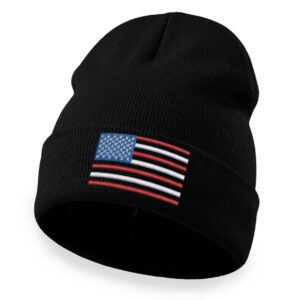
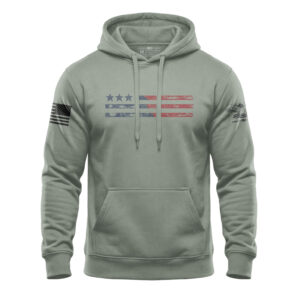
If you are refreshing your fall or winter wardrobe, these America 2 Wear pieces offer different approaches to everyday patriotic style, from understated graphics to embroidered headwear. Review each product’s specific details and origin information independently when making a purchasing decision.
-

Patriotic Beanies, American Eagle & Flag Apparel, Patriotic Hats & Headwear
$24.99Select options This product has multiple variants. The options may be chosen on the product page -
Patriotic Hoodies & Sweatshirts, American Eagle & Flag Apparel, Full Front Graphic Hoodies
Price range: $49.99 through $56.99Select options This product has multiple variants. The options may be chosen on the product page -
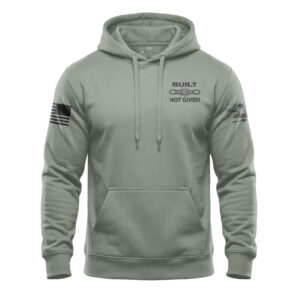
Patriotic Hoodies & Sweatshirts, Blue Collar & American Worker Apparel, Minimalist Patriotic Hoodies
Price range: $49.99 through $56.99Select options This product has multiple variants. The options may be chosen on the product page
Frequently Asked Questions About Made in USA Clothing Labels
1. Does Made in USA mean every part of a product comes from America?
The FTC’s general unqualified Made in USA standard is “all or virtually all,” not an absolute rule that every incidental component must be domestic. However, clothing covered by textile-labeling rules has specific requirements for domestic manufacturing and materials. Imported fabric ordinarily requires an appropriately qualified origin statement.
2. Is Designed in USA the same as Made in USA?
No. Designed in USA identifies design work, while Made in USA is a claim about manufacturing origin. A garment may be designed in the United States and manufactured in another country.
3. Can clothing be assembled in USA using imported materials?
Yes, imported materials can be used in products assembled domestically, but an Assembled in USA claim must satisfy the applicable FTC standard. For clothing, specific textile-origin labeling rules also apply. The accurate claim depends on where significant manufacturing and assembly occurred.
4. Does printing an imported shirt in America make it Made in USA?
No. Printing or embroidering an imported garment in the United States does not automatically change its manufacturing origin. A seller may accurately identify the domestic decoration work without misleading consumers about where the garment itself was made.
5. Are American-owned clothing brands required to manufacture in America?
No. American ownership and American manufacturing are different characteristics. An American-owned brand may sell imported garments, but its manufacturing and country-of-origin claims must still be accurate.
6. Where can I find the country of origin on a shirt or hoodie?
Check the neck label, interior garment label, or another permitted location. Clothing covered by federal textile-labeling rules generally requires country-of-origin disclosure. If shopping online, consult the product information or ask the seller to confirm the garment’s origin label.
7. Is Made in USA clothing automatically better quality?
No. Country of origin and product quality are different considerations. Evaluate construction, materials, stitching, fit, durability, and care requirements separately. A domestic manufacturing claim tells you about origin, not necessarily how long a garment will last.