Flying the American flag at home is one of the simplest ways to display a symbol that belongs to the whole country. But once the flag goes up on a porch, pole, wall, garage, or window, practical questions follow. Can you leave it up overnight? Which way should the stars face on a wall? Does the flag have to come down when it rains? What happens if it touches the ground?
American flag etiquette is largely set out in the United States Flag Code, found in Title 4 of the United States Code. The Code covers when and how the flag should be displayed, its position when shown with other flags, and standards for treating it respectfully.
For civilians, an important distinction is often missed: most of these provisions are rules and customs for respectful display rather than ordinary criminal prohibitions. The Congressional Research Service notes that most of the Flag Code has no explicit enforcement mechanism and is generally understood as declaratory and advisory. That does not make the traditions meaningless. It means flag etiquette is best understood as a shared standard of respect rather than a reason to police a neighbor’s patriotism.
Quick Answer: How Should You Display the American Flag at Home?
Daytime: The traditional practice is to display the flag from sunrise to sunset.
At night: The flag may remain up 24 hours a day when it is properly illuminated during darkness.
In bad weather: The Flag Code says the flag should not be displayed during inclement weather unless an all-weather flag is used.
On a wall: Whether hung horizontally or vertically, the union, the blue field of stars, belongs at the top and to the flag’s own right. For someone facing the flag, that means the union appears in the upper left.
The basic principle: Display the flag prominently, keep it from unnecessary damage, and treat it as a national symbol rather than ordinary decoration.
What Is the United States Flag Code?
The rules most Americans call the Flag Code appear in Title 4, Chapter 1 of the United States Code. Sections 6 through 9 address subjects such as the times and occasions for display, the flag’s position, respectful treatment, and conduct while it is being raised or lowered.
The modern federal rules grew from customs that Congress codified during the twentieth century. Today, they provide a common reference point for Americans who want to display the flag respectfully.
That distinction matters because conversations about flag etiquette can become more rigid than the law itself. According to the Congressional Research Service, most Flag Code provisions contain no explicit enforcement mechanism. For a homeowner, the practical purpose is therefore straightforward: understand the established customs and make a good-faith effort to follow them.
When Should You Fly the American Flag?
The Flag Code says it is customary to display the flag on buildings and stationary outdoor flagstaffs from sunrise to sunset. It also says the flag may be displayed 24 hours a day when a patriotic effect is desired, provided it is properly illuminated during the hours of darkness.
That gives homeowners two simple options. You can raise the flag in the morning and lower it around sunset, or you can leave it flying overnight if you provide suitable lighting.
Can You Leave the American Flag Up at Night?
Yes. A flag does not have to come down every evening. Title 4 expressly allows 24-hour display when the flag is properly illuminated during darkness.
For a home, the practical goal is to make sure the flag remains visibly illuminated rather than disappearing into darkness. A dedicated flagpole light, an appropriately positioned exterior light, or another reliable lighting arrangement can accomplish that.
What Holidays Are Especially Appropriate for Flying the Flag?
The Flag Code encourages display on all days and specifically identifies numerous national observances, including Memorial Day, Flag Day, Independence Day, Labor Day, Constitution Day, Veterans Day, Thanksgiving Day, and Christmas Day, among others.
There are special rules for certain occasions. Memorial Day is a notable example: the federal rule calls for the flag to be flown at half-staff until noon and then raised to the top of the staff. Half-staff orders can involve additional federal and state authority, so homeowners looking for current instructions should consult our guide to half-staff flag rules by state.
Can You Fly the American Flag in the Rain or Snow?
The Flag Code says the flag should not be displayed on days when the weather is inclement unless an all-weather flag is being used.
That makes the material and construction of the flag important. A flag designed for routine outdoor exposure is different from a ceremonial, cotton, burial, or indoor flag that may be damaged quickly by rain, snow, or wind.
Even an all-weather flag is not indestructible. Severe wind, ice, storms, nearby branches, damaged hardware, or other conditions can tear fabric and strain stitching. Bringing a flag inside before destructive weather is not a failure of patriotism. It is often the best way to care for it.
Which Way Should the American Flag Face on a Wall?
This is one of the easiest flag rules to reverse by accident.
When the American flag is displayed flat against a wall, either horizontally or vertically, the union should be uppermost and to the flag’s own right. From the viewpoint of a person standing in front of it, the blue field therefore belongs in the upper left.
The same basic orientation applies when a flag is displayed in a window. The Flag Code specifies that the union should appear to the left of the observer looking at it from the street.
How Do You Hang an American Flag Vertically?
Do not rotate a normally oriented horizontal display in a way that leaves the union on the viewer’s right. For a vertical wall display, arrange the flag so the blue union remains at the top and on the observer’s left.
A useful memory aid is simple: when you face a properly displayed flag on a wall, the stars are at the upper left.
This wall-display rule should not be confused with the orientation of a flag patch on certain uniforms. The familiar forward-facing union on the right shoulder has a different context. Our article on why the American flag appears backwards on some uniforms explains that tradition separately.
How Should the Flag Be Displayed From a House or Porch?
Many homes use a staff projecting outward at an angle from a porch column, wall, balcony, or window area. Under the Flag Code, when the flag is displayed from a staff projecting horizontally or at an angle from a building, the union should be placed at the peak of the staff unless the flag is being displayed at half-staff.
In practical terms, install the bracket and staff securely, give the flag enough clearance to fly freely, and keep it away from gutters, roofs, branches, vehicles, or other surfaces that can repeatedly snag or soil it.
The Code also says the flag should never touch anything beneath it, including the ground, floor, or water. Choosing the right pole height and flag size helps prevent that problem before it starts.
How Should the American Flag Be Displayed With Other Flags?
Flag placement becomes more detailed when several flags share the same display.
When state, city, local, or organizational flags are flown on the same halyard, the American flag should be at the peak. When those flags are on adjacent staffs, the American flag is raised first and lowered last, and another such flag should not be placed above it or to the American flag’s own right.
When several state or local flags or organizational pennants are grouped on staffs, the American flag should occupy the center and highest point of the group.
International displays work differently. When flags of two or more nations are displayed together, the Flag Code says they should be flown from separate staffs of the same height and should be approximately equal in size. International custom does not place one nation’s flag above another nation’s flag in peacetime.
What If the American Flag Touches the Ground?
The Flag Code says the flag should never touch the ground, floor, water, merchandise, or other things beneath it. That is a rule about proper handling and prevention.
But an accidental touch does not mean the flag must automatically be destroyed.
If a flag brushes the ground, pick it up promptly and inspect it. If it is still clean and undamaged, there is no provision in the Flag Code requiring immediate retirement simply because contact occurred. If it has become dirty, damaged, or badly worn, clean or retire it as appropriate for its condition.
Respect for the flag is shown best through thoughtful care, not by turning an accidental mistake into a ritual the Flag Code never required.
Can You Wear the American Flag on Clothing?
This question often comes from a misunderstanding of the Flag Code’s language. Section 8 says the flag should not be used as wearing apparel, bedding, or drapery. In other words, an actual American flag should not be turned into a shirt, cape, costume, or similar garment.
That is different from clothing that carries a flag graphic, stars-and-stripes artwork, or a flag-inspired design. A representation of the flag printed or embroidered on apparel is not the same physical object as taking an actual flag and cutting, sewing, or wrapping it into clothing.
The distinction is useful because respect for a physical American flag and the use of American imagery in everyday culture are related subjects, but they are not identical. For more on that broader tradition, see our discussion of Flag Day and why the American flag remains an important national symbol.
How Should You Care for an American Flag?
Good flag etiquette includes preventing avoidable wear. Section 8 says the flag should not be fastened, displayed, used, or stored in a way that allows it to be easily torn, soiled, or damaged.
For a homeowner, that means periodically checking the flag and the hardware supporting it. Look for frayed fly ends, weakening seams, fading, damaged grommets, tangled halyards, rough brackets, or nearby objects rubbing against the fabric.
A flag does not need to look factory-new forever. Outdoor flags naturally weather with use. The relevant question is whether the flag remains in a condition suitable for respectful display.
When Should an American Flag Be Retired?
The Flag Code says that when a flag is in such condition that it is no longer a fitting emblem for display, it should be destroyed in a dignified manner, preferably by burning.
That does not mean homeowners must personally burn a worn flag. Veterans organizations and community groups often conduct flag-retirement ceremonies or accept unserviceable flags for proper retirement. The Department of Veterans Affairs also notes that Veterans Service Organizations can accept flags for retirement.
Common signs that retirement may be appropriate include severe fraying, extensive tears, permanent staining, major fading, or deterioration that can no longer be reasonably repaired.
If the flag has special personal significance, particularly a burial or memorial flag, preservation may be more appropriate than continued outdoor use. The Department of Veterans Affairs specifically advises protecting burial flags from weather damage.
What About Folding the American Flag?
The familiar triangular fold is deeply established in American military and ceremonial practice, but the Flag Code itself does not prescribe an official 13-fold sequence or assign a statutory meaning to each fold.
That distinction matters because many popular explanations blend federal rules with later ceremonial traditions. Both can have meaning without being the same thing. Our detailed guide to why the American flag is folded into a triangle separates the documented tradition from the popular symbolism associated with the 13 folds.
A Simple American Flag Etiquette Checklist for Homeowners
- Display the flag from sunrise to sunset, or illuminate it properly if it remains up after dark.
- Use an all-weather flag if displaying it during inclement weather.
- When hanging the flag on a wall, keep the union at the upper left from the observer’s perspective.
- Keep the flag from touching the ground, floor, water, or other objects beneath it.
- Give an outdoor flag enough clearance to fly freely without snagging or rubbing against nearby surfaces.
- Follow the proper position of honor when displaying the American flag with other flags.
- Inspect outdoor flags periodically for damage, fading, and fraying.
- Retire a flag dignifiedly when it is no longer fit for display.
Respect Is the Point
American flag etiquette contains plenty of details, but the underlying idea is simple. The flag should be displayed deliberately and cared for as a national symbol.
That means learning the difference between an actual rule and a popular myth. It means correcting a flag that is hung the wrong way without turning an honest mistake into an accusation. And it means understanding that the traditions surrounding the flag have endured because generations of Americans have chosen to observe them.
A properly displayed flag does not need an elaborate setting. On a front porch, beside a garage, on a backyard pole, or inside a home, a little knowledge and regular care are enough to display it with respect.
Carry the Symbol Into Everyday Life
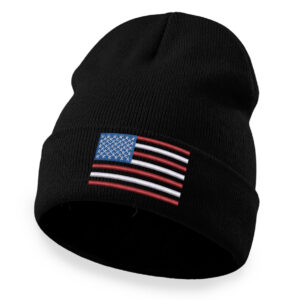
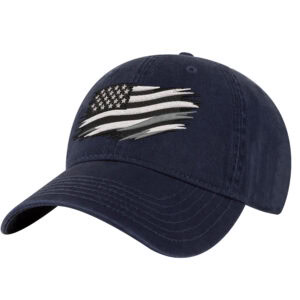
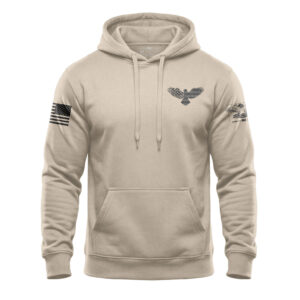
The flag itself deserves careful handling. Flag-inspired apparel is a different way Americans carry its imagery into everyday life. For the cooler months ahead, these three in-stock America 2 Wear pieces connect naturally with the subject while keeping the actual flag and flag-inspired clothing distinct.
-

Patriotic Beanies, American Eagle & Flag Apparel, Patriotic Hats & Headwear
$24.99Select options This product has multiple variants. The options may be chosen on the product page -
Patriotic Hats & Headwear, American Eagle & Flag Apparel, Patriotic Baseball Hats
$29.99Select options This product has multiple variants. The options may be chosen on the product page -
Patriotic Hoodies & Sweatshirts, American Eagle & Flag Apparel, Minimalist Patriotic Hoodies
Price range: $49.99 through $56.99Select options This product has multiple variants. The options may be chosen on the product page
Frequently Asked Questions About American Flag Etiquette
Can the American flag be left outside at night?
Yes. The Flag Code allows the American flag to be displayed 24 hours a day when it is properly illuminated during the hours of darkness. Otherwise, the traditional custom is outdoor display from sunrise to sunset.
Which way should the American flag face when hung vertically?
When displayed vertically against a wall, the union should be at the top and to the flag’s own right. To a person facing the flag, that places the blue field of stars in the upper left.
Can you fly the American flag in the rain?
The Flag Code says the flag should not be displayed during inclement weather unless an all-weather flag is used. Even with an all-weather flag, taking it down during severe storms can prevent unnecessary damage.
Do you have to destroy an American flag if it touches the ground?
No. The Flag Code says the flag should not touch the ground, but it does not require automatic destruction after accidental contact. Pick it up, inspect it, and clean it if necessary. Retirement is appropriate when its overall condition makes it no longer fit for display.
Is it against the Flag Code to wear an American flag shirt?
The Flag Code says an actual flag should not be used as wearing apparel. A shirt or hat bearing a flag graphic or flag-inspired design is not the same thing as turning a physical American flag into clothing.
Should the American flag be higher than a state flag?
When state or local flags share the same halyard, the American flag should be at the peak. With adjacent staffs, another state or local flag should not be placed above the American flag or in the position of superior honor to its right. Displays involving flags of other nations follow different rules and generally use separate staffs of equal height.
When should a worn American flag be retired?
The Flag Code says a flag that is no longer a fitting emblem for display should be destroyed in a dignified manner, preferably by burning. Severe fraying, tearing, permanent staining, fading, or deterioration can indicate that retirement is appropriate. Veterans organizations and other community groups may accept worn flags for proper retirement.